

Your business software might still work, but is it helping your business move forward? Perhaps your team spends hours transferring...



For years, most businesses in Nepal have managed their people the same way. Attendance in a register, leave requests on paper or over the phone, employee details in a folder somewhere, and payroll worked out by hand at the end of every month. But as a business grows, so does the admin, and what once took an hour starts taking days. Records go missing, leave balances get disputed, payroll mistakes creep in, and the person handling HR spends more time on paperwork than on people.
This is where HR software comes in. As more Nepali businesses grow past what manual processes can handle, HR software has become something genuinely worth understanding. This guide explains what HR software actually is, what it does, and how to know whether your business is ready for it.
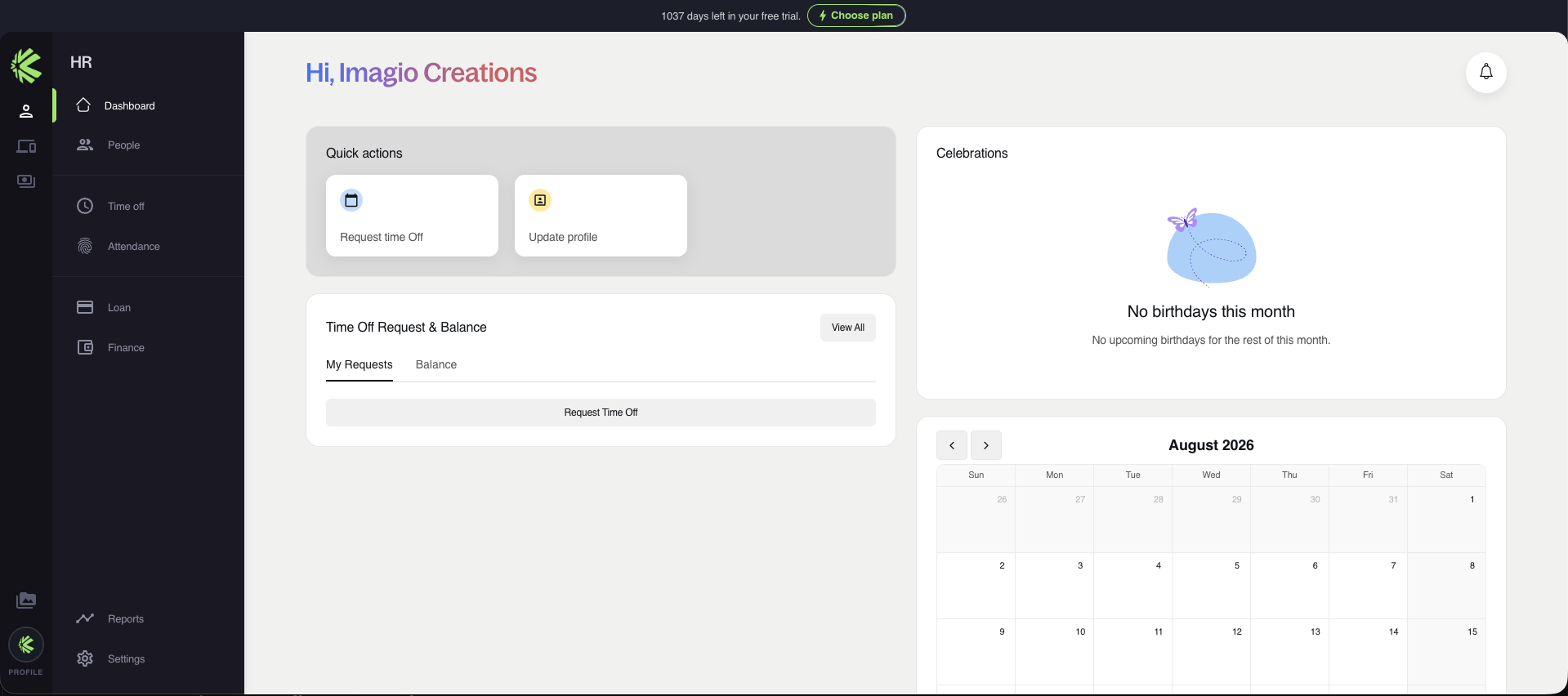
HR software is a single system that manages the people side of a business, from the day someone is hired to the day they’re paid, and everything in between. Instead of managing separate registers, spreadsheets, and folders, everything lives in one connected place: employee records, attendance, leave, holidays, and payroll.
The point isn’t just to digitize paperwork, but to connect it. When attendance, leave, and payroll all talk to each other, a day marked as leave automatically flows through to the payroll calculation, and a new employee’s details become available to every part of the system the moment they’re added. The business owner can also see what’s actually happening with their team without chasing anyone for information. That connection turns hours of manual admin into something that mostly runs itself.
Good HR software covers the full cycle of managing employees. Here’s what that looks like in practice, module by module.
Onboarding Management
Bringing a new employee on board involves a surprising amount of admin. Collecting documents, setting up records, assigning roles, and making sure nothing gets missed. HR software organizes this into a clear, repeatable process, so every new hire gets set up properly and consistently. Instead of spending time gathering details and paperwork each time, the business follows the same smooth onboarding path for everyone, and the new employee’s information becomes ready to use across the whole system from day one.
Employee Records
At the core of any HR system is a single, reliable place for all employee information: personal details, roles, documents, employment history, and more. Rather than relying on scattered files and folders that only one person knows how to navigate, the system stores everything securely in one place, making it easy to find and update. When businesses keep records centralized and accurate, everything else built on top of them, from attendance and leave to payroll, becomes far more reliable too.
Attendance Management
Tracking who’s in, who’s out, and who’s late is one of the most time-consuming parts of manual HR. HR software automates it, recording attendance accurately and giving you a clear, real-time picture of your team. This removes the guesswork and the disputes that come with paper registers, and because attendance feeds directly into payroll, it also removes a major source of month-end errors.
Leave Management
Leave is one of the most common sources of friction in a growing business. Requests are made verbally and forgotten, leave balances become unclear, and disagreements often arise at the worst possible time. HR software gives leave a clear process: employees request it, managers approve it, and the system updates balances automatically. Everyone can see where things stand, records stay accurate, and the business keeps a proper history of who took what and when.
Holiday Management
Nepal has a full and varied calendar of public holidays, and different organizations observe different ones. HR software lets a business set up its own holiday calendar so the system applies holidays consistently and reflects them automatically in attendance and payroll. No more manually working out which days count. The system handles it automatically based on how your business actually operates.
Payroll Management
Payroll is where all of this comes together, and where the value of connected HR software is clearest. When attendance, leave, and holidays already live in the same system, calculating salaries, deductions, and payments becomes far simpler and far more accurate. HR software calculates payroll based on real, up-to-date data rather than manual tallying, generates payslips, and keeps organized records, turning one of the most stressful, error-prone tasks of the month into something reliable and repeatable.
The shift toward HR software in Nepal isn’t about following a trend; rather, it’s about growth outpacing manual processes. A business with a handful of employees can manage with registers and spreadsheets. A business with dozens of employees across roles, shifts, and locations cannot, at least not without a lot of wasted time and a lot of mistakes.
Several things push businesses toward making the change. The admin burden grows faster than the team does, until someone spends most of their time on HR paperwork instead of actual work. Errors in attendance, leave balances, or payroll become more frequent and more costly, and they damage trust with employees. And as businesses become more organized and professional, they want accurate records, clear processes, and the ability to see what’s happening with their team at a glance. HR software delivers all of that in one place.
There’s also a practical local angle. HR software built with Nepali businesses in mind, one that understands local holiday calendars, payroll needs, and how businesses here actually operate, fits far better than generic international tools designed around assumptions that don’t match the local context.
You don’t need HR software from day one. But there are clear signs a business has outgrown manual processes: attendance and leave are tracked across multiple registers or spreadsheets that don’t match; payroll takes days and still produces errors; employees dispute leave balances or attendance records; onboarding a new hire becomes a scramble every time; and the person handling HR spends more time on paperwork than on people. If more than one of these sounds familiar, it’s usually a sign that the cost of doing HR manually has grown larger than the cost of a system that does it for you.
HR software isn’t about replacing the human side of managing people. It’s about removing the manual admin that gets in the way of it. By bringing onboarding, employee records, attendance, leave, holidays, and payroll into one connected system, it gives growing Nepali businesses accuracy, clarity, and time back. For a business that’s outgrown registers and spreadsheets, it’s often one of the most practical investments available.
At Imagio Creations, this is an area we care about deeply, so much so that we’re building an HR system designed specifically for how Nepali businesses actually work, bringing onboarding, records, attendance, leave, holidays, and payroll together in one place. It’s launching soon. If you’d like to know more, or talk about what your business needs from HR software, get in touch — or message us on WhatsApp, whichever’s easier.
Your business software might still work, but is it helping your business move forward? Perhaps your team spends hours transferring...
Custom software development can take anywhere from a few weeks to more than a year, depending on the project's scope,...
If you're planning to build custom software in Nepal, one question comes before all the others: what will it cost?...
