


Custom software development can take anywhere from a few weeks to more than a year, depending on the project's scope,...



Businesses today operate in a more complex and competitive environment. Sales are no longer just transactions but data points that impact the core operational system: inventory planning, financial reporting, and strategic planning. This is the main reason POS system development has become a necessity for modern businesses in Nepal, not just an optional technology upgrade.
Traditionally, POS systems were designed primarily to record sales and print receipts. While this function still exists, it represents only a small part of what modern businesses require. Today’s POS systems are expected to manage sales, inventory, payments, employees, and reporting within a single workflow.
A well-developed POS system centralizes daily operations and ensures sales data flows accurately into inventory counts, financial summaries, and performance reports. The system integrates CRM tools with accounting, supports multi-location operations, and provides role-based access for staff. Because of these expanding requirements, businesses increasingly need custom POS systems. A custom system provides a strategic advantage by reducing dependency on manual processes and removing the inconsistencies caused by off-the-shelf solutions.
Many businesses start with ready-made POS software, but these systems often struggle to adapt as operations grow. Differences in product structure, pricing, tax handling, and internal workflows make generic software limiting over time.
Custom POS system development allows businesses to build software around their actual operations. Instead of forcing teams to adjust their processes to fit the system, the system is designed to support existing workflows which reduces training time and minimizes operational strain. This matters especially for businesses in Nepal, where product structures, tax handling, and pricing often don’t fit the assumptions built into foreign off-the-shelf software.
One of the most important benefits of a modern POS system is real-time visibility. Daily sales data is instantly available, enabling business owners to monitor performance without delays. Similarly, inventory is automatically updated with every transaction, which minimizes errors and avoids stock mismatches.
Businesses can clearly identify product movement, purchasing requirements, and overall stock health when sales and inventory are managed through the same system.
When properly developed, a POS system continuously generates accurate operational data that becomes a powerful decision-making tool rather than just a record of past transactions. Businesses can analyze sales trends, identify high-performing products, and monitor staff performance through built-in reports.
Instead of relying on manual spreadsheets, decision-makers have access to accurate, up-to-date information. The data collected over time supports smarter pricing, inventory planning, and growth initiatives.
Customer payment behavior has evolved drastically, and POS systems must keep pace. Modern POS systems in Nepal support multiple payment methods: cash, card, digital wallets like eSewa and Khalti, and QR payments and handle complex scenarios like partial payments, refunds, and adjustments. These processes must remain fast and reliable, especially during peak sales hours.
Custom POS system development ensures smooth payment workflows. A system failure during active business hours directly affects performance and revenue, making reliability a critical requirement rather than a technical afterthought.
A POS system must grow with the business. A system that works for a single location may not be suitable for multi-location operations or higher transaction volumes. Custom POS development allows businesses to scale without replacing their core system.
Modern POS systems also need to integrate accounting, CRM, and inventory modules, along with eCommerce platforms. A well-developed POS system acts as the heart of the company, ensuring data flows smoothly across the business without manual intervention.
POS systems handle sensitive transactions, including financial data. Proper system development includes secure access controls, audit logs, and compliance with applicable regulations. These elements protect both the business and its customers.
Investing in POS system development is not just about current needs but about preparing for future growth. A well-designed POS system evolves with the business, supports new features, and adapts to market changes.
POS systems have evolved from basic billing tools into essential business platforms. Modern POS system development supports sales management, inventory control, payment processing, reporting, and system integration within a single, reliable framework.
For modern businesses, the question is no longer whether a POS system is needed, but whether the system in place is capable of supporting current operations and future growth. Investing in POS system development ensures operational efficiency, data clarity, and long-term scalability.
If you are planning to streamline and optimize your business operations, choosing the right POS system is an important step. At Imagio Creations, we specialize in custom software development in Nepal, building flexible POS systems that can be customized to your business needs. For businesses that need more than billing, our POS can scale into a full POS SaaS platform with inventory, accounting, CRM, HR, and payroll built in.
We work closely with you to understand your workflow and design solutions that simplify operations, improve visibility, and support long-term growth. Interested in working together? Get in touch or message us on WhatsApp, we’re always happy to help.
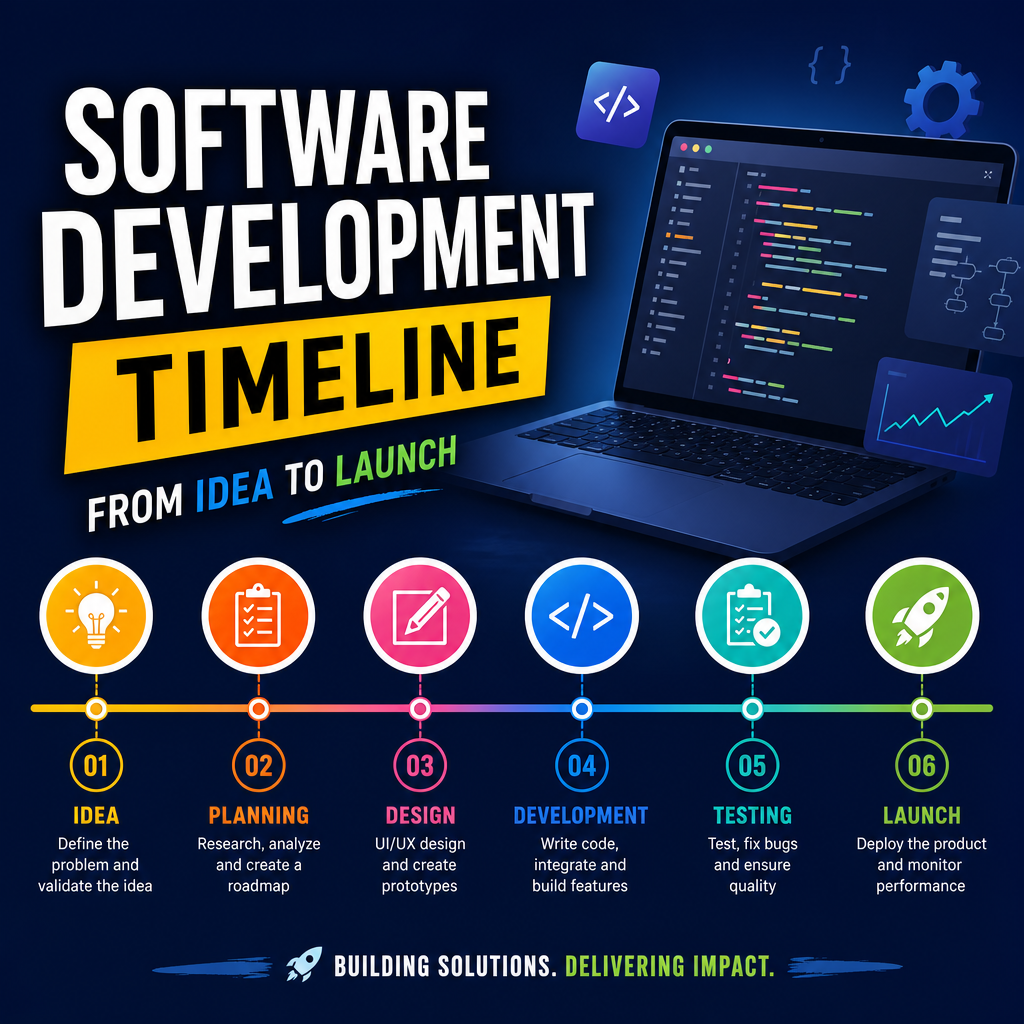
Custom software development can take anywhere from a few weeks to more than a year, depending on the project's scope,...
If you're planning to build custom software in Nepal, one question comes before all the others: what will it cost?...

Yes, outsourcing software development to Nepal is safe: provided you choose the right partner. Nepal has a large pool of...
