


Custom software development can take anywhere from a few weeks to more than a year, depending on the project's scope,...



For years, most businesses in Nepal relied on fragmented systems. A billing machine at the counter, a spreadsheet for inventory, a separate book for accounts, and payroll handled by hand at the end of every month. That model is breaking down. As businesses in Nepal grow, the demand for POS SaaS software development in Nepal is rising fast, because owners increasingly want one connected system instead of five tools that operate independently.
A POS SaaS system solves exactly this problem. It turns the point of sale, the moment a transaction happens into the foundation that feeds every other part of the business: inventory, accounting, customer data, HR, and payroll, all in one place and updated in real time.
This guide explains what a POS SaaS system is, how each part works, and why a growing number of Nepali businesses are moving to integrated, system-driven platforms.
A POS SaaS system is a cloud-based software platform that connects a business’s point of sale with its inventory, accounting, customer management, HR, and payroll in a single, unified system. SaaS stands for Software as a Service, meaning the software runs online and is accessed through a subscription rather than installed and maintained on local machines.
The advantage is integration. Instead of managing separate, standalone systems, a business operates inside one framework where data flows automatically from one module to the next. A sale recorded at the counter instantly updates stock levels, feeds the accounting ledger, and adds to the customer’s purchase history without anyone re-entering it.
When built around a POS-driven architecture, the system becomes more powerful still, because sales data becomes the single source of truth that connects every other business function.
Nepali businesses are adopting POS SaaS software because manual coordination no longer scales as they grow. A shop with one outlet can manage with a cash drawer and a notebook; a business with multiple branches, hundreds of products, and a growing team cannot.
Several local factors are accelerating this shift. Digital payments in Nepal have become mainstream, with customers expecting to pay by QR, mobile wallets like eSewa and Khalti, and cards alongside cash – and a modern POS needs to handle all of them in one transaction flow. At the same time, business owners want real-time visibility into sales and stock across locations, which disconnected tools simply cannot provide. For many Nepali businesses, adopting an integrated system is no longer an upgrade but a requirement to stay competitive.
A modern POS SaaS system brings together the functions a growing business depends on into one scalable ecosystem. The core modules are sales management, inventory control, financial tracking, customer relationship management, employee management, payroll processing, and reporting and analytics.
Each of these can work on its own, but the real value comes from how they connect. Below is what each module does and how it fits into the wider system.
A POS system is the operational entry point of a business, processing orders and daily transactions in real time. It handles multiple transactions at once, ensuring speed and accuracy even during peak hours.
Integrated directly with inventory, it updates stock levels automatically after every sale, keeping product counts accurate without manual checks. Modern POS systems in Nepal support multiple payment methods: cash, cards, QR, and digital wallets in a single checkout flow. While a POS can run on its own for sales, within a SaaS platform it becomes the central engine that feeds data into accounting, CRM, HR, and payroll. This is why POS is considered the foundation of modern business operations.
An Inventory Management System tracks stock levels automatically and gives a business complete visibility over product movement. It updates quantities in real time, reducing stock shortages, overstocking, and manual errors.
The system generates low-stock alerts and supports informed purchasing decisions. Integrated with POS and accounting, it eliminates duplicate data entry and keeps reporting consistent across the business, which directly protects working capital.
An accounting system tracks all income and expenses, giving a clear, structured view of a business’s financial health. It automates ledger entries using real-time data from across the platform and generates financial reports instantly.
By reducing manual bookkeeping, it lowers errors and improves accuracy. It can run as a standalone accounting solution or connect with POS and payroll for complete financial visibility.
A CRM system organizes customer information and manages leads and sales pipelines in a structured way. It tracks follow-ups and centralizes communication history so no opportunity is missed.
When connected with POS data, a CRM reveals customer behavior and purchasing patterns – insight that can be turned into targeted marketing and stronger customer retention.
An HR Management System (HRMS) is the central platform for managing a workforce. It maintains employee records, tracks attendance, administers benefits, and handles day-to-day HR operations.
Modern HR systems go further with recruitment tracking, onboarding, performance reviews, and workforce analytics, helping businesses spot skill gaps and make informed decisions while improving the employee experience.
A payroll system calculates salaries, tax deductions, and bonuses accurately, generates payslips, and processes payments on time. By minimizing manual calculation, it reduces errors and improves reliability.
Integrated with HR and accounting, payroll data flows smoothly across departments while maintaining compliance and confidentiality.
Individually, each module solves one problem. Together, they remove the gaps where errors and lost time usually hide. A single sale at the POS updates inventory, posts to accounting, logs against the customer’s CRM record, and at month-end, feeds the data payroll and reporting depend on. Nothing is entered twice, and every department works from the same real-time numbers.
This is the core difference between a collection of separate tools and a true POS SaaS system: in the first, data is copied and reconciled by hand; in the second, it moves on its own.
Businesses in Nepal can no longer rely on isolated tools or manual coordination to stay efficient. Operational clarity today depends on structured, integrated systems that connect every department through real-time data.
A full POS SaaS system is the foundation of that shift. By centralizing sales and connecting inventory, accounting, CRM, HR, and payroll, it gives businesses the visibility, control, and scalability they need to grow. The organizations that thrive are the ones building on adaptable, system-driven platforms – working not just faster, but smarter.
At Imagio Creations, we specialize in custom software development in Nepal, building modular POS SaaS systems designed to support businesses at every stage of growth. Our platforms go beyond basic billing – integrating inventory, accounting, CRM, HR, and payroll into one adaptable ecosystem. Whether you need a standalone POS system or a fully integrated business management platform, we build for flexibility, scalability, and real operational efficiency.
If you’re planning your next software project, get in touch or message us on WhatsApp, we’re always happy to help.
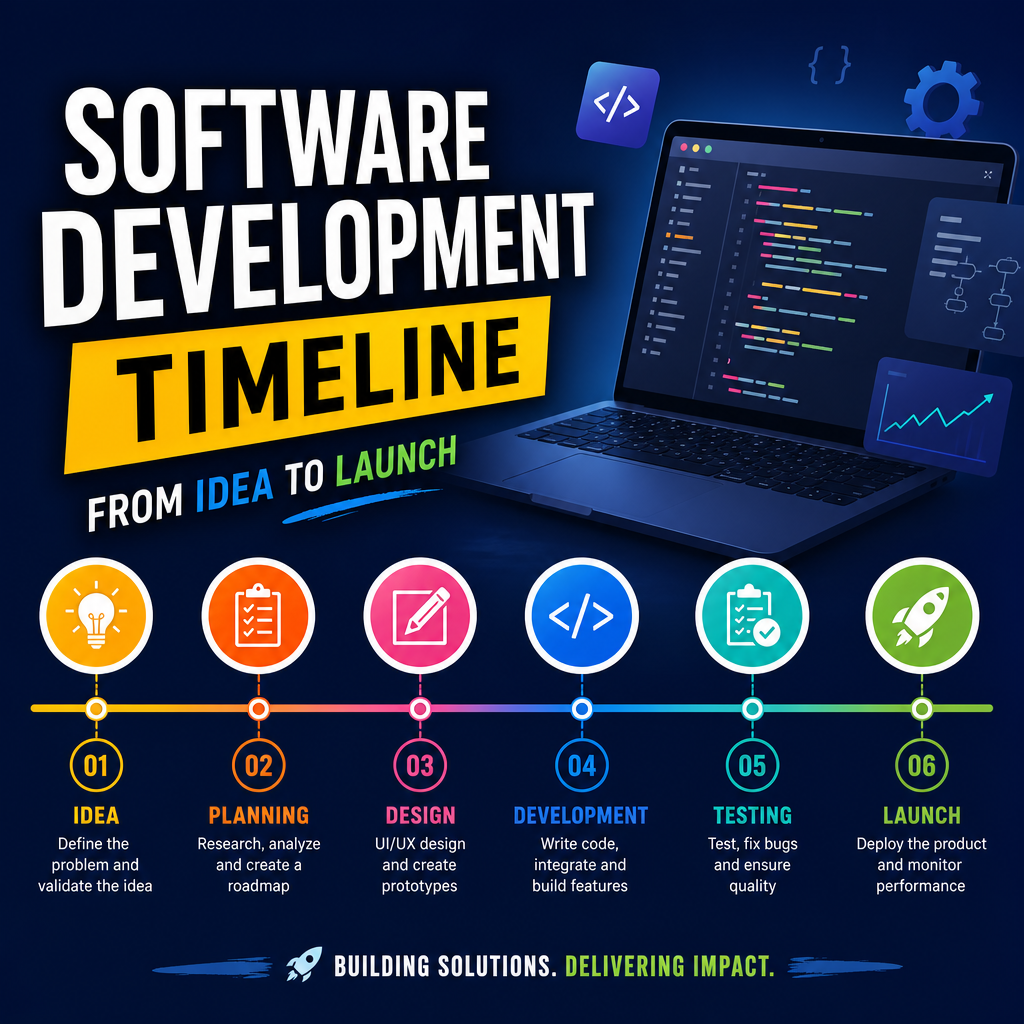
Custom software development can take anywhere from a few weeks to more than a year, depending on the project's scope,...
If you're planning to build custom software in Nepal, one question comes before all the others: what will it cost?...

Yes, outsourcing software development to Nepal is safe: provided you choose the right partner. Nepal has a large pool of...
